How to Properly Tow an Automatic Car Without Damage
Towing an automatic car the wrong way can destroy your transmission in minutes. This guide shows you exactly how to tow an automatic car safely, whether you use a flatbed, tow dolly, or flat towing method. You will learn the critical steps, speed limits, gear rules, and when to call a professional instead of risking costly repairs.
You are on the side of the road. Your automatic car won’t start. Maybe you ran out of fuel, or perhaps you had a breakdown on a long road trip. Whatever the reason, you need to tow your car. But here is the scary part. Towing an automatic car the wrong way can cause thousands of dollars in damage. Your transmission, your wheels, your brakes, and your steering system are all at risk. So how do you tow an automatic car without destroying it?
This guide walks you through every step. We cover the safe methods, the gear rules, the speed limits, and the mistakes that wreck automatic transmissions every single day. By the end, you will know exactly what to do. You will feel confident. And most importantly, your car will stay safe.
Key Takeaways
- Never tow an automatic car with all four wheels on the ground unless the transmission is in neutral and you follow strict guidelines.
- A flatbed tow truck is the safest method for towing any automatic vehicle long distances.
- Always check your owner’s manual for manufacturer-approved towing instructions and speed limits.
- Keep towing speed under 50 mph and distance under 50 miles when flat towing to minimize wear.
- Ignoring neutral gear or towing lights can lead to steering lock, brake damage, and total transmission failure.
- Call a professional roadside service if you are unsure about the right towing method for your vehicle.
📑 Table of Contents
Why Towing an Automatic Car Is Different
Automatic cars work very differently from manual cars. The transmission system relies on fluid pressure to shift gears smoothly. When the engine is off and the wheels are turning, the transmission pump stops working. Without that fluid pressure, internal parts grind against each other. This causes heat. Heat causes friction. And friction causes damage. That is why towing an automatic car requires extra care and preparation.
Manual cars are different. You can put a manual car in neutral and tow it with all four wheels on the ground. The gears are mechanically engaged, so there is less risk. Automatic transmissions do not work the same way. They need special handling. Some automatic cars can be flat towed safely. Others must go on a flatbed. It all depends on your vehicle.
What Happens When You Tow an Automatic Car Wrong
If you tow an automatic car with the drive wheels on the ground and the transmission in gear, several bad things can happen. The transmission gears spin without lubrication. The internal clutch packs overheat. The bearings wear out fast. In many cases, the damage is permanent. You might need a full transmission rebuild. That repair can cost anywhere from $1,800 to $3,500 or more.
Even towing with the wrong method can damage your steering system. When the engine is off, the power steering pump is not working. Turning the steering wheel while towing can strain the rack and pinion. It can also cause the wheels to lock up unexpectedly. This is extremely dangerous, especially at higher speeds.
Methods for Towing an Automatic Car
There are three main ways to tow an automatic car. Each method has its own rules and limitations. Let us break them down so you can pick the right one for your situation.
Method 1: Flatbed Tow Truck
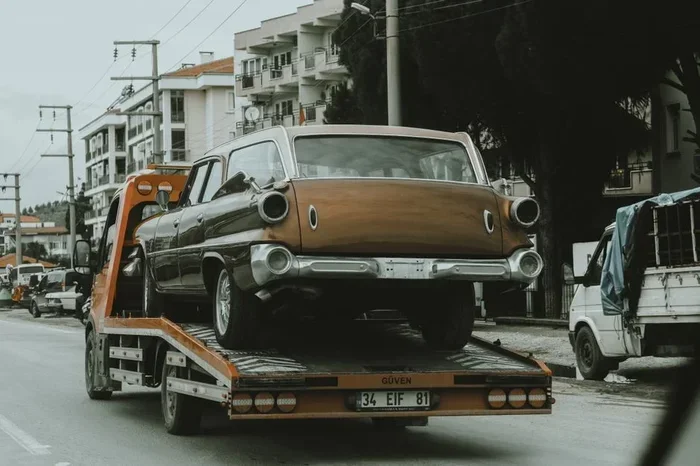
A flatbed tow truck is the safest option for towing an automatic car. The entire vehicle sits on the flat platform. All four wheels are off the ground. The transmission does not spin at all. There is zero risk of drivetrain damage. This is the method recommended by almost every car manufacturer.
Flatbed towing works for every automatic car. Whether your vehicle is front-wheel drive, rear-wheel drive, or all-wheel drive, a flatbed handles it perfectly. The downside is cost. Flatbed towing usually costs more than other methods. But when it comes to protecting your transmission, it is worth every penny.
Method 2: Tow Dolly
A tow dolly is a small trailer that lifts the front wheels off the ground. The rear wheels stay on the road. This method works well for front-wheel drive automatic cars. You simply put the car in neutral, strap it to the dolly, and drive away.
However, tow dollies have limitations. They do not work well for rear-wheel drive vehicles without disconnecting the drive shaft. They also have weight limits. Most tow dollies handle cars up to 3,400 pounds. Before you use a tow dolly, check your vehicle weight and your owner’s manual. Not all automatic cars are safe to tow on a dolly.
Method 3: Flat Towing (All Four Wheels on the Ground)
Flat towing means all four wheels stay on the road while the car is being towed. This method is popular with RV owners. They call it “dinghy towing” or “toad towing.” Some automatic cars can be flat towed safely, but only if the transmission is in neutral and the ignition is turned to the accessory position.
Here is the critical part. Not all automatic cars can be flat towed. Many manufacturers explicitly forbid it. If you flat tow a car that is not designed for it, you will void your warranty. You will also risk serious transmission damage. Always check your owner’s manual before flat towing. Look for sections on “towing,” “flat towing,” or “dinghy towing.”
Step-by-Step Guide to Tow an Automatic Car
Now that you know the methods, let us walk through the actual process. Follow these steps carefully every single time you tow an automatic car.
Step 1: Read Your Owner’s Manual
This is the most important step. Your owner’s manual contains the manufacturer’s towing guidelines. It tells you which methods are safe for your specific vehicle. It also lists speed limits and distance restrictions. Some manuals say you can tow up to 50 miles at 50 mph. Others say flat towing is completely forbidden. Do not skip this step.
If you lost your owner’s manual, search online for a free PDF version. Most manufacturers offer them on their websites. You can also call your local dealership and ask for the towing section.
Step 2: Choose the Right Towing Method
Based on your manual, pick the safest towing method. If flatbed towing is recommended, book a flatbed truck. If flat towing is allowed, gather your tow bar, base plate, and safety cables. If you are using a tow dolly, make sure it is rated for your vehicle’s weight.
Here is a quick comparison of the three methods:
- Flatbed: Safest for all vehicles. Most expensive. Zero drivetrain risk.
- Tow Dolly: Good for front-wheel drive cars. Moderate cost. Some drivetrain risk if not set up correctly.
- Flat Towing: Cheapest option. Only safe for approved vehicles. Requires strict adherence to gear and ignition rules.
Step 3: Prepare the Vehicle
Before the tow truck arrives, prepare your car properly. Start by turning the ignition to the accessory position. This unlocks the steering wheel. It also allows you to steer while towing. Next, shift the transmission into neutral. Double-check that it is fully in neutral. You do not want it slipping back into gear during the tow.
Turn off the ignition completely once the steering is unlocked. You do not want the engine running while being towed. Release the parking brake. The parking brake can cause damage if it stays engaged during towing. However, if you are flat towing, consult your manual about the parking brake. Some vehicles require it to remain on.
Step 4: Attach Safety Equipment
If you are using a tow bar or dolly, attach all safety equipment properly. Connect the tow bar to the base plate securely. Attach safety cables in a crisscross pattern under the tongue. This prevents the tow bar from dropping if it disconnects. Check all connections twice before you start moving.
Make sure your tow vehicle has working towing lights. The brake lights and turn signals on the towed car must be visible to other drivers. You can use a portable wiring kit that plugs into the tow vehicle’s trailer harness. This is not optional. It is a legal requirement in most states.
Step 5: Drive Safely During the Tow
Once everything is connected, drive carefully. Keep your speed under 50 mph. Avoid sudden braking and sharp turns. Treat the towed car as an extension of your vehicle. Leave extra following distance because the towed car does not have engine braking.
Check your mirrors frequently. Watch for any movement or shifting in the towed vehicle. If anything looks loose or feels different, pull over safely and inspect everything. It is better to stop and check than to cause damage on the highway.
Step 6: After the Tow
Once you reach your destination, inspect your car thoroughly. Check the transmission fluid level. Towing can cause fluid to shift or leak. If the fluid looks dark or smells burnt, get it checked by a mechanic right away. You should also check your tires, brakes, and steering components for any signs of stress or damage.
If you have been towing for a long distance, consider getting an oil change. Towing puts extra strain on the engine and drivetrain. Fresh oil helps everything run smoothly again. If you want to learn more about basic car maintenance after towing, check out our guide on how to change oil in car for simple step-by-step instructions.
Common Mistakes That Cause Damage
Even with the best intentions, people make mistakes when towing automatic cars. Here are the most common errors and how to avoid them.
Mistake 1: Towing with the Transmission in Gear
This is the number one mistake. If you tow an automatic car while the transmission is in Drive or Reverse, the internal gears spin without proper lubrication. The result is catastrophic damage. Always, always put the car in neutral before towing. Write yourself a reminder note if you need to. It is that important.
Mistake 2: Ignoring the Owner’s Manual
Every car is different. What works for one automatic car may destroy another. Your owner’s manual is the ultimate authority on towing your specific vehicle. Do not rely on advice from friends or internet forums. Follow what the manufacturer says. If the manual says flat towing is not allowed, do not do it.
Mistake 3: Exceeding Speed and Distance Limits
Most manufacturers limit flat towing to 50 mph and 50 miles. Going faster or farther increases the risk of transmission overheating. If you need to tow longer distances, use a flatbed instead. Do not push the limits. Your transmission does not forgive shortcuts.
Mistake 4: Forgetting to Unlock the Steering Wheel
When the engine is off, the steering wheel locks in place. If you tow the car with the steering locked, the tires will scrub against the road. This damages the tires and strains the steering linkage. Always turn the ignition to accessory before towing to unlock the steering.
Mistake 5: Using the Wrong Towing Equipment
Not all tow bars and dollies are created equal. Using equipment that is not rated for your vehicle’s weight is dangerous. It can also cause improper alignment during towing, which damages the suspension. Invest in quality towing equipment and check the weight ratings before you tow.
When to Call a Professional Instead of DIY Towing
Sometimes the best decision is to call for professional help. You should not attempt to tow your automatic car yourself if any of the following apply:
- You do not have the right equipment. Using improper tow bars or straps is dangerous and can cause accidents.
- Your car is all-wheel drive. AWD vehicles are especially sensitive to towing methods. Professional flatbed towing is almost always required.
- The distance is more than 50 miles. Longer distances increase the risk of transmission damage, even with the correct method.
- You are not familiar with towing procedures. If you have never towed before, practice with a professional first. It is not worth the risk to your car.
- Your car has electronic or advanced systems. Modern automatic cars with complex electronics may require special handling that only professionals understand.
If you find yourself in a situation where you are stranded and do not know what to do, calling roadside assistance is always a smart move. Many insurance policies and auto clubs include towing services. You can also search online for local towing companies with good reviews. Do not let pride or impatience lead you into making a costly mistake.
In some situations, you might be dealing with a lost key scenario that requires towing. If you have lost your only car key, towing becomes even more complicated. Our lost my only car key complete replacement guide can help you understand your options before you call a tow truck.
Final Thoughts
Towing an automatic car does not have to be scary. With the right knowledge and the right method, you can get your car to safety without any damage. The key is preparation. Read your manual. Choose the right towing method. Follow every step carefully. And when in doubt, call a professional.
Remember, your automatic transmission is one of the most expensive components in your car. Protecting it during towing should always be your top priority. A little extra caution now can save you thousands of dollars in repairs later. Drive safe, tow smart, and your car will thank you.
If you are planning a long road trip or moving to a new city, knowing how to handle towing situations gives you peace of mind. Keep this guide bookmarked. Share it with friends who drive automatic cars. And always, always put safety first on the road.
Frequently Asked Questions
Can I tow an automatic car with all four wheels on the ground?
It depends on your vehicle. Some automatic cars are approved for flat towing, but many are not. Always check your owner’s manual first. If the manual says flat towing is allowed, you must keep the transmission in neutral and the ignition in the accessory position. If you are unsure, use a flatbed tow truck to be completely safe.
What is the maximum safe towing speed for an automatic car?
Most manufacturers recommend keeping towing speed under 50 mph. Some vehicles have lower limits, so always check your owner’s manual. Exceeding the speed limit increases heat buildup in the transmission, which can cause serious damage over time.
Do I need to disconnect the drive shaft for towing?
It depends on the towing method and your vehicle type. For rear-wheel drive cars being towed with a tow dolly or flat towing, you may need to disconnect the drive shaft to prevent transmission damage. Front-wheel drive cars being towed with the front wheels on a dolly usually do not need this step. Consult a professional if you are not sure.
How far can I safely tow an automatic car in neutral?
Most manufacturers limit flat towing distance to about 50 miles at speeds under 50 mph. Beyond that distance, the risk of transmission damage increases significantly. For longer distances, always use a flatbed tow truck. This is the safest option for any automatic vehicle regardless of distance.
What happens if I tow my automatic car in the wrong gear?
Towing in Drive or Reverse causes the transmission internals to spin without proper lubrication. This leads to overheating, worn clutch packs, and bearing failure. In worst cases, the entire transmission needs to be replaced. The repair cost can easily exceed $3,000. Always double-check that the transmission is in neutral before any towing begins.
Should I turn off the ignition when towing an automatic car?
Yes, turn the ignition off after unlocking the steering wheel. You need the steering unlocked to steer the towed vehicle safely. But you do not want the engine running because the engine provides power steering and power braking, which can mask problems with the towed vehicle’s actual braking and steering ability.
=== CONCLUSION ===
Now you know exactly how to properly tow an automatic car without damage. You have the methods, the steps, and the warnings. The most important takeaway is this: always check your owner’s manual before towing. Every vehicle is different, and following the manufacturer’s guidelines is your best protection against costly repairs.
Use a flatbed whenever possible. It is the safest method for every automatic car. If you must use a tow dolly or flat towing method, follow every step in this guide. And never hesitate to call a professional when you are unsure. Your transmission is worth protecting. Apply what you learned here, and you will keep your automatic car safe on the road for years to come.