Can You Sign Over a Car Title to a Private Party for Free
You can sign over a car title to a private party for free with no money exchanging hands. This process is legal in most states and is often used for gift transfers, family sales, or settling debts. Signing a car title over without payment requires proper paperwork, correct signatures, and awareness of your state’s specific rules.
Have you ever wondered if you can sign over a car title to a private party for free? Maybe a friend needs a vehicle, or a family member wants to take over your old car. Perhaps you want to settle a debt without cash changing hands. Whatever the reason, transferring a car title without payment is something many people need to do but don’t know how to handle.
The good news is that you can absolutely sign over a car title with no money exchanging hands. It is legal in most states. But there are rules you need to follow. Missing a step can cause problems down the road. In this guide, we walk you through everything you need to know about free private party car title transfers. You will learn the steps, the paperwork, the common pitfalls, and how to stay on the right side of the law.
Key Takeaways
- Free title transfers are legal: You can sign over a car title to a private party without any money changing hands in most states.
- Paperwork matters: You need the physical title, a bill of sale, and proper identification to complete the transfer.
- State rules vary: Each state has different requirements for no-money title transfers, so check your local DMV guidelines.
- Avoid common mistakes: Skipping the bill of sale or leaving fields blank can cause legal headaches later.
- License plates may transfer: In many cases, the license plates stay with the seller, not the buyer.
- Gift tax considerations: Large free transfers may have tax implications you should be aware of.
📑 Table of Contents
- Understanding What It Means to Sign Over a Car Title
- How to Sign Over a Car Title to a Private Party
- Is It Legal to Transfer a Car Title for Free?
- Documents You Need for a No-Money Title Transfer
- Common Mistakes People Make When Transferring a Car Title for Free
- Tips for a Smooth Private Party Car Title Transfer
- Final Thoughts
Understanding What It Means to Sign Over a Car Title
A car title is a legal document. It proves ownership of a vehicle. When you sign over a car title, you are transferring your legal ownership to someone else. This is called a title transfer. A private party sale happens when two individuals buy and sell a car directly. No dealership is involved.
When no money is involved, this is often called a gift transfer or a zero-dollar sale. Some people also do this to pay off a favor or settle an agreement. Whatever the reason, the legal process is the same. You must follow your state’s rules carefully. A sloppy transfer can lead to fines, registration issues, or even legal disputes later.
Why Do People Transfer Titles for Free?
There are many reasons people choose to sell or give away a car for free. Here are the most common ones:
- Family transfers: Parents passing a vehicle down to children or siblings sharing a car.
- Debt settlements: Using a car to pay off a loan or settle an obligation.
- Gift giving: Giving a car as a birthday or holiday present.
- Removing an unwanted vehicle: Getting rid of a car you no longer want without going through a sale.
- Charity donations: Transferring a vehicle to a nonprofit organization.
No matter the reason, the process for signing over a car title with no payment remains consistent. The key is doing it correctly.
How to Sign Over a Car Title to a Private Party
The process of transferring a car title for free is straightforward. But it does require attention to detail. Here is a step-by-step breakdown of how to do it right.
Step 1: Gather the Necessary Documents
Before you go anywhere, make sure you have everything you need. Missing documents will delay the process. Here is what you typically need:
- The physical car title (also called a certificate of title)
- A valid government-issued ID for both the seller and the buyer
- A bill of sale
- Proof of insurance (in some states)
The car title is the most important document. If you have lost it, you will need to request a duplicate from your state’s DMV or equivalent agency before proceeding.
Step 2: Fill Out the Title Correctly
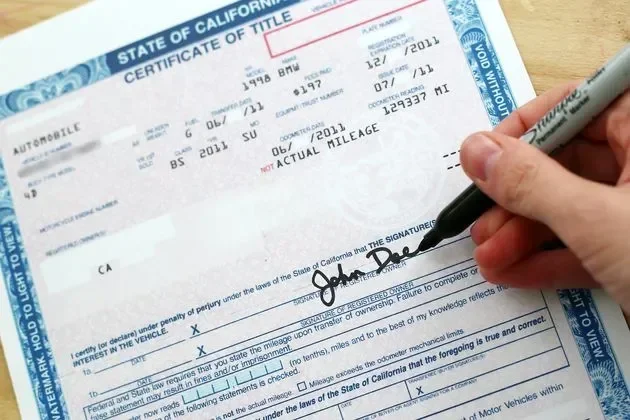
Look at the back of your car title. There is usually a section labeled “Assignment of Title” or something similar. You need to fill this out carefully. Here is what to do:
- Write the buyer’s full legal name in the assignee section
- Enter the sale date (even if no money was exchanged, use the actual date of transfer)
- For the purchase price, write “gift” or “$0” — whichever your state prefers
- Sign your name exactly as it appears on the front of the title
- Have the buyer sign their name as well
Pro tip: Some states have specific forms for zero-dollar title transfers. Check with your local DMV or visit their website to see if a special form is required. Signing over a car title with no money exchanging hands is a common question, and many state agencies have dedicated resources to help.
Step 3: Complete a Bill of Sale
A bill of sale is a written record of the transaction. Even when no money changes hands, this document is essential. It protects both the seller and the buyer. The bill of sale should include:
- The full names and addresses of both parties
- The vehicle make, model, year, and VIN (Vehicle Identification Number)
- The odometer reading at the time of transfer
- The date of transfer
- A statement that the vehicle was sold as a gift or for $0
- Signatures from both the seller and the buyer
Some states provide a standardized bill of sale form. You can usually find these on the DMV website or pick one up at your local office. Using the official form ensures everything is correct.
Step 4: Submit the Transfer to Your DMV
Once both parties have signed the title and bill of sale, the next step is to submit the documents. In most states, the seller must report the transfer. This notifies the DMV that you are no longer the legal owner. The buyer then needs to register the vehicle in their name.
The seller should also remove their license plates if required by state law. When you sell a car, the license plates typically stay with the seller, but rules vary by state. Always check your local regulations to be sure.
Is It Legal to Transfer a Car Title for Free?
Yes, transferring a car title with no money is legal in all 50 states. However, the rules and requirements vary from state to state. Some states have specific forms for gift transfers. Others require additional documentation. A few states may impose a small processing fee even when the sale price is zero.
It is important to understand that while the transfer itself is legal, there may be tax implications. If you give away a car valued at a high amount, the IRS may consider it a taxable gift. This is rare for most vehicles, but it is worth knowing. If you are unsure, a quick call to your local DMV or a tax advisor can clear things up.
Can Someone Else Sell Your Car for You?
If you are not the person physically signing the title, you might wonder if someone else can sell your car in your name. The answer is yes, but with conditions. You typically need to provide a power of attorney or written authorization. The person selling the car on your behalf must have proper documentation proving they are authorized to act for you. Can someone else sell my car in my name is a related topic that many people search for when handling transfers on behalf of others.
Documents You Need for a No-Money Title Transfer
Having the right documents makes or breaks a free car title transfer. Here is a detailed look at each document and why it matters.
| Document | Purpose | Required? |
|---|---|---|
| Car Title | Proves ownership and enables transfer | Yes |
| Bill of Sale | Records the transaction details | Yes |
| Government ID | Verifies identity of both parties | Yes |
| Odometer Disclosure | Records current mileage | Usually |
| Power of Attorney | Authorizes another person to act on your behalf | Only if applicable |
| Insurance Proof | Shows the vehicle is insured | State-dependent |
Make copies of everything before you submit original documents. Keeping records protects you if any disputes arise later. The car title transfer process is much smoother when both parties are prepared.
Common Mistakes People Make When Transferring a Car Title for Free
Even though transferring a title for free is simple, mistakes happen. Here are the most common errors and how to avoid them.
Leaving Fields Blank on the Title
Never leave blank spaces on a car title. If a field does not apply, write “N/A” or draw a line through it. A blank field can be used fraudulently by someone else later. This is one of the biggest risks in any title signing process.
Using the Wrong Sale Price
Some sellers write “$0” while others write “gift.” Check your state’s requirements. Using the wrong format can cause your title transfer to be rejected. When in doubt, call your local DMV and ask what format they prefer for no-money transfers.
Forgetting to Sign the Title
This sounds obvious, but it happens more than you would think. Both the seller and the buyer must sign the title. An unsigned title means the transfer is incomplete. The vehicle remains legally tied to the seller until the title is properly signed and submitted.
Not Reporting the Transfer
Some sellers forget to notify the DMV after the transfer. This can lead to problems if the new owner gets tickets or the vehicle is involved in an accident. Reporting the transfer protects the seller from future liability. Selling a car title with a co-signer also requires reporting the transfer, and the same principle applies to free transfers.
Skipping the Bill of Sale
A verbal agreement is not enough. Without a written bill of sale, there is no paper trail. If a dispute arises later, you have no proof of the transfer. Always complete a bill of sale, even for free transactions.
Tips for a Smooth Private Party Car Title Transfer
Follow these practical tips to make sure your free car title transfer goes smoothly:
- Meet at the DMV: If possible, both parties should go to the DMV together to complete the transfer in person.
- Verify the buyer’s identity: Check their driver’s license to make sure the name matches the title exactly.
- Take photos: Document the condition of the vehicle and all signed documents with your phone.
- Cancel your insurance: Once the title is transferred, cancel your auto insurance on the vehicle to avoid paying for coverage you no longer need.
- Keep copies: Make photocopies of the signed title, bill of sale, and your ID. Store them somewhere safe.
- Follow up: Check with the buyer a few weeks later to make sure they have registered the vehicle in their name.
Expert insight: The smoother you make the process, the fewer problems you will face later. A clean private car sale — even one with no money — protects both parties and ensures a hassle-free experience for everyone involved.
Final Thoughts
Signing over a car title to a private party for free is completely doable. You just need to follow the right steps and have the proper documents. Whether you are giving a car to a family member, settling a debt, or simply getting rid of an old vehicle, the process is straightforward when you know what to do.
Remember to fill out the title correctly, complete a bill of sale, and submit everything to your local DMV. Avoid the common mistakes we covered. And always check your state’s specific requirements before you begin. With a little preparation, your no-money car title transfer will be quick, legal, and worry-free.
Take the time to do it right the first time. A proper car title transfer protects your ownership history and keeps you clear of any future liability. Your future self will thank you for it.
Frequently Asked Questions
Can I sign over a car title with no money exchanging hands?
Yes, you absolutely can. Signing over a car title for free is legal in all 50 states. You simply need to follow your state’s specific procedures for a no-money or gift transfer. Make sure you use the correct sale price notation, such as “gift” or “$0,” on the title.
Do I need a bill of sale if I am giving the car away for free?
Yes, a bill of sale is essential even when no money is involved. It creates a written record of the transaction and protects both the seller and the buyer. Most states require a bill of sale for any title transfer, regardless of the sale price.
Will I still be liable for the car after I sign over the title?
Once you properly sign over the title and report the transfer to your DMV, you are generally no longer liable for the vehicle. However, failing to complete the transfer correctly can leave you responsible for issues like parking tickets or accidents. Always follow up to confirm the transfer is complete.
Can I transfer a car title for free to a family member?
Yes, transferring a title to a family member at no cost is common and legal. The process is the same as any other private party transfer. Some states may offer reduced fees for family transfers, but the paperwork requirements remain the same.
What happens if I make a mistake on the car title?
Mistakes on a car title can cause delays or rejections. If you make an error, do not try to erase or whiteout it. Instead, contact your DMV to find out the proper correction procedure. In many cases, you may need to request a replacement title before proceeding with the transfer.
How long does a free car title transfer take?
The actual signing process takes only a few minutes. However, the full transfer — including DMV processing — can take anywhere from a few days to a few weeks depending on your state. Submitting all documents correctly and completely will help speed up the process significantly.