Can You Start Your Car Without a Key Fob in an Emergency
Starting your car without a key fob is a straightforward process that can save you from a stressful lockout. Whether your key fob battery is dead, the device is lost, or you’re dealing with a push button start system failure, most modern vehicles have a built-in backup method. This guide shows you exactly how to bypass the keyless entry system and get your engine running safely.
You reach for your key fob on a busy morning, only to find the battery dead or the device missing. Panic sets in, but the good news is that you can still drive your car. Modern vehicles with push button start systems are designed with a failsafe. Whether you are dealing with a dead key fob battery, a lost remote, or a simple emergency lockout, there is a reliable way to get the engine running. This guide walks you through every method, brand by brand, so you are never stuck in the driveway.
Understanding how to start your car without a key fob is a basic survival skill. It takes just a few minutes to learn, and it can save you from a costly roadside call. I have helped dozens of drivers navigate this exact situation, and the process is almost always simpler than it seems. Let us break it down step by step.
Key Takeaways
- You can start your car without a key fob using a hidden mechanical key blade or an emergency start procedure.
- Dead key fob battery is the most common reason for a no-start situation, and a simple workaround exists.
- Every vehicle with keyless ignition has a backup method—check your owner’s manual for the exact location.
- Common mistakes like pressing the brake pedal incorrectly or using the wrong slot can delay the process.
- Quick tips such as keeping a spare fob battery in your glove box can prevent lockouts entirely.
- Knowing how to bypass the key fob gives you confidence during emergencies and roadside situations.
- If all else fails, roadside assistance or a locksmith can help you start the car safely.
📑 Table of Contents
Why You Might Need to Start Your Car Without a Key Fob
A key fob is a small electronic device that communicates with your car’s vehicle security system. When the fob is near the proximity sensor, the car recognizes it and allows you to start the engine with a button press. But what happens when that communication fails? Several common scenarios can leave you stranded.
- Dead fob battery: The CR2032 or CR2025 coin cell inside the fob loses its charge. The fob still works for locking and unlocking, but the transponder chip cannot send a strong enough signal to start the car.
- Lost or damaged fob: You leave the fob at home or it falls into a snowbank. The car cannot detect it at all.
- Water or cold damage: Extreme temperatures or moisture can short-circuit the fob’s internal circuitry.
- System glitch: Sometimes the ignition switch or the car’s computer simply fails to read the fob, even when the battery is new.
In all these cases, you do not need a replacement fob immediately. You can use a backup start procedure to drive to the nearest dealership or auto parts store. This is exactly why automakers include a hidden emergency key inside every smart key fob.
How Keyless Ignition Systems Work
Before you learn the workaround, it helps to understand the system. A keyless entry car uses a smart key that emits a low-frequency radio signal. When you press the push button start, the car checks for that signal. If the transponder chip inside the fob matches the vehicle’s stored code, the ignition switch engages and the engine starts.
The system relies on a proximity sensor mounted near the steering column or center console. If the fob is too far away, or if its battery is too weak to reach the sensor, the car will refuse to start. This is a security feature, not a flaw. However, it means you need to know where the backup slot is.
The Hidden Mechanical Key Blade
Every smart key fob contains a hidden key blade tucked inside the plastic shell. This is a small, fold-out metal key that looks like a traditional car key. It is designed for a very specific purpose: to open the mechanical key slot on the steering column or door. Even if the key fob battery is completely dead, this mechanical key can still get you into the car.
To find the blade, look for a small button or slide on the side of the fob. Press it, and the blade pops out. You can use this key to unlock the driver’s door. Once inside, you are ready for the next step.
Using the Emergency Start Procedure
Once you are inside the car, you can start the engine without the fob by placing the dead fob against a specific spot. Most manufacturers call this the emergency start or override mode. The idea is to hold the fob close enough to the proximity sensor so that the weak signal can still be read.
Here is the general process that works for most push button start vehicles:
- Sit in the driver’s seat and make sure the brake pedal is pressed firmly.
- Hold the dead key fob directly against the start button or the steering column area.
- Press the push button start as you normally would.
- The car should recognize the fob’s transponder chip and allow the engine to crank.
If this does not work, try placing the fob against the center console cup holder or the gear shift area. Different models have the sensor in slightly different locations. The goal is to get the fob as close to the ignition switch reader as possible.
Jump-Starting with a Dead Fob Battery
Sometimes the key fob battery is not completely dead, but too weak to trigger the start. In this case, you can use a jump starter pack or another vehicle to boost the car’s 12-volt battery. Once the car’s electrical system has full power, the proximity sensor may be able to read the weak fob signal. This is a quick trick that works surprisingly often.
Connect the jumper cables to the car’s battery terminals, start the assisting vehicle, and then try pressing the push button start again while holding the fob against the sensor. The increased voltage can give the fob just enough power to communicate.
Step-by-Step Methods to Start Your Car Without a Key Fob
Now that you understand the basics, let us look at the exact steps for different situations. I will walk you through the most common methods, from the simplest to the more advanced.
Method 1: The Hidden Key Blade and Manual Start
This is the most universal method. It works on nearly every keyless entry vehicle made after 2005.
- Use the hidden key blade inside the fob to unlock the driver’s door.
- Sit inside and locate the mechanical key slot. On many cars, this slot is hidden behind a small plastic cover near the steering column. Pry off the cover gently.
- Insert the emergency key into the slot and turn it to the “On” or “Accessory” position.
- While the key is in the “On” position, press the push button start with your foot on the brake pedal.
- The engine should start, even with a completely dead fob.
This method bypasses the vehicle security system entirely and uses the old-fashioned ignition switch mechanism. It is a reliable fallback that every driver should know.
Method 2: The Override Slot on the Start Button
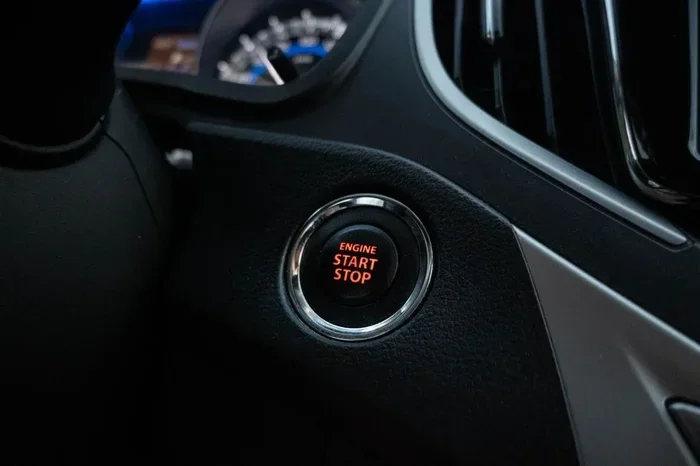
Many newer cars have a small override slot right next to or under the push button start. This slot is designed specifically for a dead fob situation.
- Press the brake pedal firmly.
- Look closely at the start button. You may see a tiny hole or a small indent next to it.
- Take the hidden key blade or a small flathead screwdriver and insert it into that slot.
- Press gently until you feel a click, then press the push button start normally.
- The car will start in override mode, allowing the engine to crank without a working fob.
This is the method used by many Toyota, Honda, and Ford models. Check your owner’s manual to see if your car has this slot.
Method 3: Manufacturer-Specific Emergency Steps
Each car brand has its own quirks. Here are a few examples of how different manufacturers handle a no-start with dead fob situation:
- Toyota and Lexus: Hold the dead fob directly against the start button. The proximity sensor will read the fob even through the plastic shell. Press the brake and push the button.
- Honda and Acura: Many models have a small mechanical key slot inside the start button area. Use the hidden blade to unlock it, then turn the key to the “On” position before pressing the start button.
- Ford and Lincoln: Ford vehicles often have a backup start procedure where you place the dead fob in a specific cup holder or console slot. The sensor is located there, and the car will start.
- Chevrolet and GMC: Some models require you to hold the fob against the steering column. Others have a small override slot on the steering column lock.
- Nissan and Infiniti: These vehicles typically let you press the start button with the fob placed on the center console, near the radio or climate controls.
The key is to find the proximity sensor location for your specific model. The owner’s manual will always list this. If you do not have the manual, a quick online search for “emergency start procedure for [your car model]” will give you the exact spot.
Comparison Table: Methods by Car Brand
| Brand | Method | Where to Place Dead Fob | Special Notes |
|---|---|---|---|
| Toyota | Hold fob against start button | Directly on the push button | Works even with completely dead fob |
| Honda | Use hidden key blade slot | Inside the start button area | Turn key to “On” first |
| Ford | Console override slot | Center console cup holder or slot | Check for a small cover near the shifter |
| Chevrolet | Steering column sensor | Against the steering column lock | Some models use a hidden key slot |
| Nissan | Center console placement | On the center console near radio | Press brake and start normally |
This table gives you a quick reference when you are standing next to your car, unsure of what to do. Keep a screenshot on your phone for easy access during a stressful moment.
Quick Tips and Common Mistakes
Quick Tips to Avoid Lockout
- Carry a spare fob battery in your glove box. A CR2032 battery costs a few dollars and can save you from a dead fob situation.
- Know your car’s override slot before you need it. Spend five minutes reading the owner’s manual section on push button start.
- Keep the hidden key blade accessible. Do not let it get lost inside the fob shell. Practice removing it once a year.
- Replace the fob battery every two years to prevent unexpected failures. This is a simple maintenance task anyone can do.
- Store a spare fob in a different location, such as your office or a trusted family member’s home.
Common Mistakes That Make It Worse
- Pressing the start button without the brake pedal engaged. The car will not start if you do not press the brake firmly first.
- Placing the fob too far from the sensor. Even a few inches can make the difference. Hold it right against the button or slot.
- Using the wrong slot. Some cars have a slot for the mechanical key, but it only unlocks the door. It does not start the engine.
- Ignoring the steering wheel lock. If the steering wheel is locked, you may not be able to turn the ignition. Gently wiggle the wheel left and right while turning the key.
- Assuming the car is completely dead. The 12-volt battery may still be fine. Try the jump-start method before calling a tow truck.
Expert Insight: Why This Happens
According to automotive engineers, the vehicle security system is designed to be forgiving. Automakers know that fobs fail, and they build in multiple layers of backup. The hidden key blade and the override slot are not afterthoughts—they are intentional safety features. The most important thing is to stay calm and follow the steps methodically. Panicking can lead to mistakes, like pressing the wrong button or forgetting to apply the brake. Take a breath, locate the backup method, and the car will start.
When to Call a Professional
Most of the time, you can resolve a no-start with dead fob situation in under five minutes. However, there are moments when professional help is the right call.
- If the ignition switch itself is damaged and the mechanical key will not turn.
- If the transponder chip inside the fob is cracked or corroded beyond repair.
- If you are in an unsafe location, such as a dark parking lot or a highway shoulder, and you do not feel comfortable working on the car.
- If you have tried all the methods and the car still will not start. The vehicle security system may have a deeper electronic fault that requires a dealer scan tool.
In these cases, roadside assistance or a mobile locksmith can come to you. They carry emergency key blanks and can program a new fob on the spot. Keep the phone number of your insurance roadside package or a local locksmith saved in your contacts right now. It is a small step that can save you hours of frustration.
Conclusion
Knowing how to start your car without a key fob is one of the most valuable skills you can have as a driver. A dead battery, a lost remote, or a system glitch should never leave you stranded. With the hidden mechanical key blade, the override slot, and the correct placement of the dead fob, you can get back on the road in minutes. The methods are simple, safe, and built into every modern keyless entry vehicle. Take a few minutes today to locate your car’s backup start procedure. Keep a spare battery in the glove box, and you will be prepared for anything. Confidence comes from preparation, and now you have the knowledge to handle a key fob emergency like a pro.
Frequently Asked Questions
Can you start a car with a completely dead key fob?
Yes, you can. Most vehicles with push button start have a hidden mechanical key blade inside the fob. Use that blade to unlock the door, then place the dead fob against the start button or a specific override slot. The car’s proximity sensor can still read the transponder chip even with a dead battery, allowing the engine to start.
Where is the emergency key slot on a Toyota?
On most Toyota models, you simply hold the dead fob directly against the push button start. The proximity sensor is built into the button itself. Press the brake pedal firmly, then press the start button while the fob is touching it. The car will recognize the fob and start the engine.
What should I do if my key fob gets wet and won’t start the car?
First, try the hidden mechanical key blade to get inside. Then, dry the fob thoroughly and replace the battery. If the fob still does not work, place it against the override slot or the steering column sensor. Water damage can sometimes affect the transponder chip, but the backup method will usually bypass the issue long enough to get you to a repair shop.
Can a locksmith help me start my car without a key fob?
Absolutely. A locksmith can bring a blank emergency key and program a new fob on the spot. They can also help if the ignition switch is damaged or the vehicle security system needs a reset. Keep a trusted locksmith’s number saved in your phone for these situations.
How often should I replace my key fob battery?
Replace the key fob battery every two years, or as soon as you notice reduced range. A dead battery is the most common cause of a no-start with a smart key. Keeping a spare battery in your glove box ensures you are never caught off guard.
Will starting my car without a key fob damage the vehicle?
No, it will not. The backup start procedure and override mode are designed by the manufacturer exactly for this purpose. They are safe, temporary solutions. You can use them as many times as needed without harming the ignition switch or the vehicle security system.